
Rear-End Collisions
We examine the collision sequence, available video, vehicle damage and witness accounts when the drivers disagree about braking, traffic conditions or how the impact occurred.
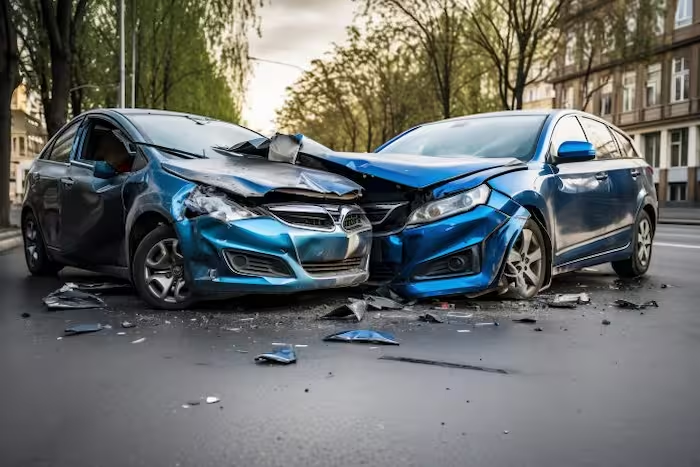
Legal help for injured drivers and passengers with medical bills, lost wages, insurance claims and disputed fault.
We represent people injured in rear-end, intersection, head-on, hit-and-run and other car crashes, including collisions involving a driver working for a business.
After a car crash, you may be trying to arrange medical care while an insurance adjuster asks for answers. Our Wichita car accident lawyers help injured drivers and passengers throughout Kansas identify available insurance coverage, document their losses and pursue an injury claim.
When you hire Bull Attorneys, we handle the legal and insurance work within the scope of your representation, explain the next steps and keep you informed as your claim develops.
or request a free consultation. No attorney fee unless we recover compensation. Calls answered 24/7.
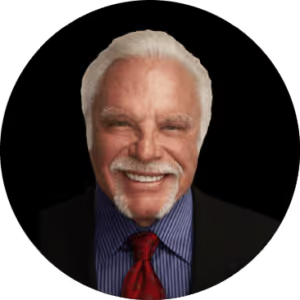
Legal Review: Bradley A. Pistotnik, CEO of Bull Attorneys, P.A. He graduated from the University of Kansas School of Law with a Juris Doctorate in 1981 and has represented thousands of injured people in Wichita and across Kansas.
His experience handling motor-vehicle injury claims informs the firm's approach to evidence, medical documentation, insurance coverage and case preparation.
In my experience, a serious car accident case is rarely just a car accident. The value of the case is built by preserving evidence, understanding the medical injuries, finding all insurance, proving fault, proving how the injuries changed the client's life, and explaining the full loss in a way an adjuster, judge, or jury can understand.
Our team investigates fault, applicable insurance and any business responsibility, then develops the medical and financial evidence needed to present the client's actual losses.
A useful injury claim connects three things: how the crash happened, how you were injured and what those injuries have cost you. We investigate each part and explain what evidence is still needed.
Bull Attorneys helps injured drivers and passengers by:
We begin by identifying which evidence can resolve the disputed issues in your crash. A disagreement about a traffic signal may require different records from a rear-end collision or a crash involving a working driver. We request available records and seek to preserve relevant video, vehicles and electronic information.
72-hour car accident checklist
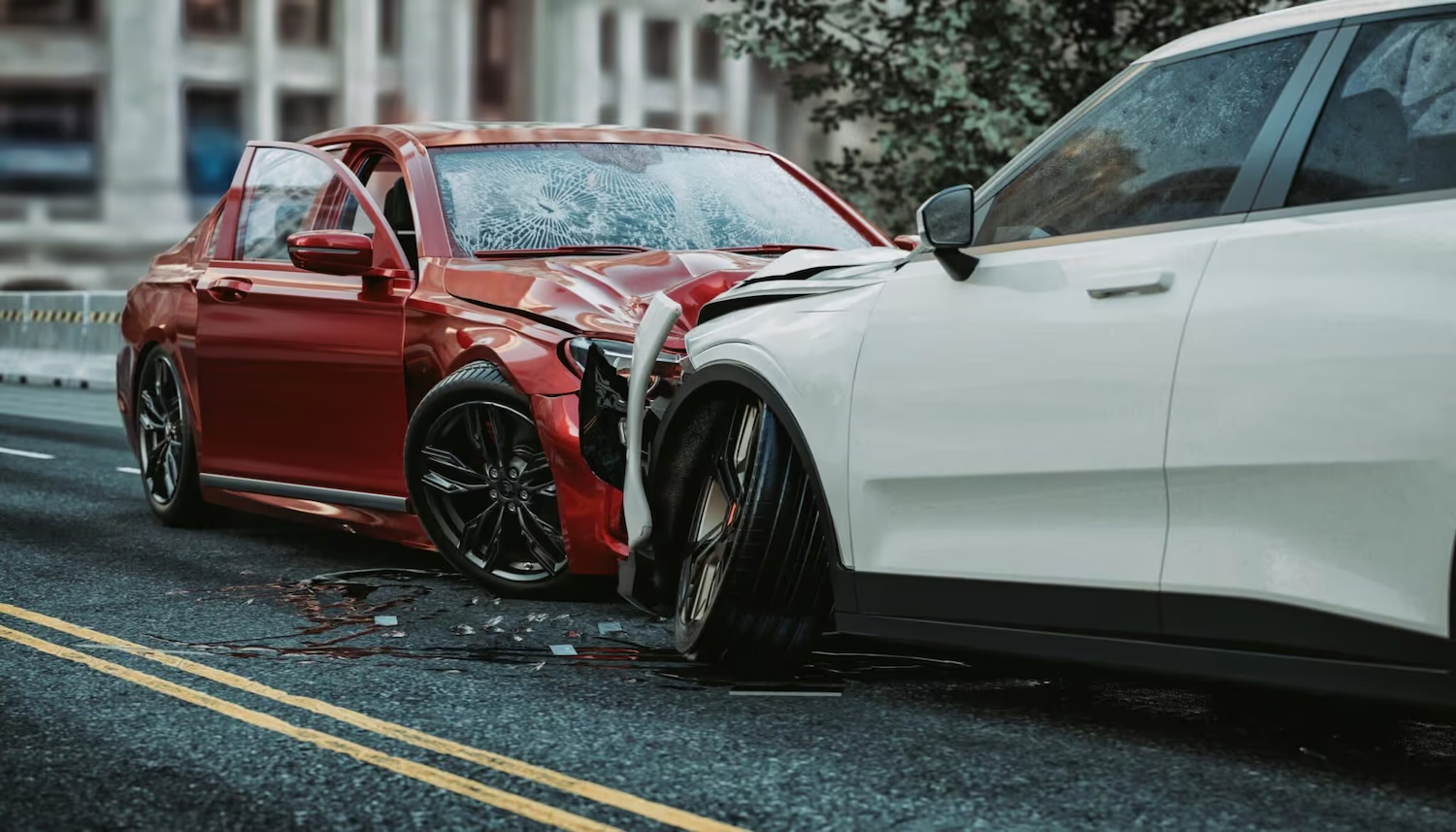
Our Wichita and Kansas car wreck lawyers handle many different types of motor vehicle accidents. The legal issue is not just how the wreck happened. The legal issue is how we prove fault, preserve evidence, find insurance, prove the medical harm, and show the full loss to the insurance company, judge, or jury.
We examine the collision sequence, available video, vehicle damage and witness accounts when the drivers disagree about braking, traffic conditions or how the impact occurred.
When drivers disagree about a signal or right of way, we look for available video, witness accounts, traffic-control information and the rules that apply to the intersection.
We examine right-of-way, sight lines, vehicle positions and available witness or video evidence when one driver turns across another's vehicle path.
We investigate lane position, vehicle damage, roadway evidence and witness accounts to determine how the vehicles came into contact and who may be responsible.
We review available police evidence, test results and criminal-case records, and evaluate civil claims supported by the facts.
We investigate available evidence identifying the driver and review potential PIP and uninsured motorist coverage. Even when the driver is not found, coverage may be available, subject to policy terms and Kansas law.
When a driver is working, we investigate the employment or business relationship, the trip's purpose, relevant safety practices and available personal or commercial insurance coverage. Employer responsibility depends on the facts. For more information visit our Delivery Driver Accidents Page.
We investigate visibility, right of way, speed, vehicle movements and the conduct of everyone involved. A disputed right-of-way issue calls for analysis rather than an assumption about fault. For more information visit our Bicycle Accidents Page.
We help evaluate the heirs' wrongful death claim and any separate claims belonging to the estate, including conscious pain and suffering when supported by the evidence. We also investigate potentially responsible parties and available coverage. See Kansas K.S.A. 60-1901 and K.S.A. 60-1801. For more information see our Wrongful Death page.
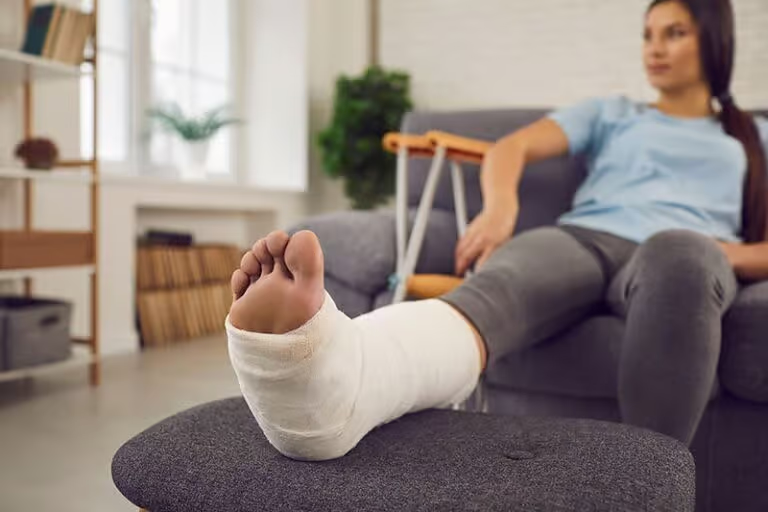
Kansas PIP coverage may help pay initial medical bills and other covered losses regardless of who caused the crash. Our lawyers and support staff help identify the proper insurer, organize claim forms and medical bills, meet deadlines, and document reasonable, necessary treatment related to the accident. Coverage limits and eligibility rules still apply. See K.S.A. 40-3103.
When a client misses work, we gather employer records, doctor restrictions, disability notes, tax information when needed, and other proof of wage loss. When the injuries are serious, we also evaluate future medical treatment, permanent injury, future wage loss, life-care needs, and the long-term effect on the client and family.
Depending on the evidence and applicable law, an injury claim may include past and future medical expenses, lost income, reduced earning capacity, pain, suffering, disability and disfigurement. Property losses require their own documentation. When a person dies, wrongful-death and estate claims involve different recoverable losses and should be evaluated separately. See K.S.A. 60-249a.
Call for a free consultation 24/7
Put safety and medical care first. Once you are safe, consider speaking with a car accident attorney before signing a release or giving a recorded statement to the other driver's insurer, especially if you were injured, fault is disputed or several insurers may be involved.

A consultation may be useful when:
One of our lawyers or a case manager will go through an accident questionnaire with you, then a lawyer will advise you legally about the merits of your case. There is no charge for the initial consultation. This helps you make an educated decision about your accident and legal rights.
Many Kansas personal-injury lawsuits are subject to a two-year limitation period. Exceptions, accrual rules and notice requirements can change the analysis. A different analysis applies to children under eighteen years of age. If a case involves a claim against a municipality, a 120-day notice period applies to comply with the Kansas Tort Claims Act. See K.S.A. 12-105b(d)(1).
Kansas insurance and fault rules affect how a claim is handled. The summaries below explain common issues; the answer in an individual case depends on the facts and available insurance coverage.
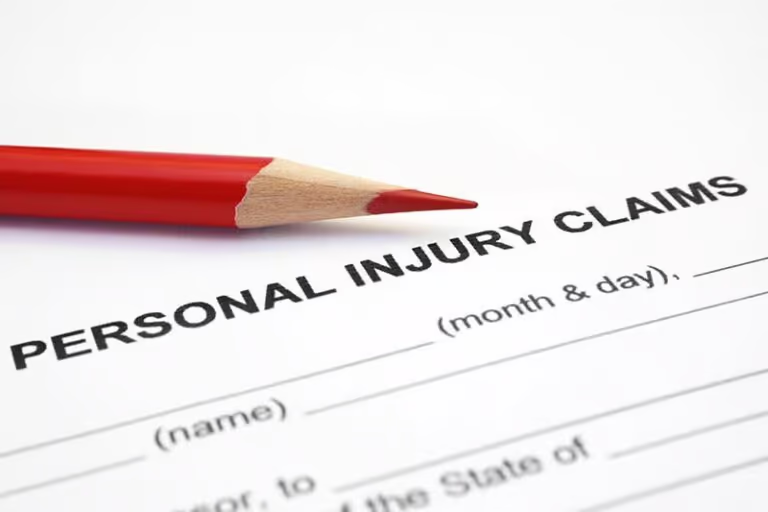
Applicable personal injury protection coverage generally pays initial covered benefits regardless of fault. The proper insurer depends on the injured person's status, household and vehicle ownership, as well as statutory priority rules. No-fault does not eliminate claims against a negligent driver or make fault irrelevant.
Minimum coverage includes $4,500 for medical expenses, $4,500 for rehabilitation, disability benefits with a $900 monthly limit for up to one year, substitution benefits up to $25 per day for up to 365 days, funeral benefits up to $2,000, and qualifying survivors' benefits. Higher purchased limits may apply. Benefits depend on eligibility and the statutory conditions; $900 is not an automatic monthly payment. See K.S.A. 40-3103.
Higher PIP, uninsured motorist and underinsured motorist limits may be available. Review coverage before a crash; increasing limits afterwards does not change the coverage in force for an earlier accident.
Kansas generally requires $25,000 for bodily injury or death to one person, $50,000 total for bodily injury or death to two or more people in one accident, and $25,000 for property damage. These are insurance limits, not a statement of what an injury claim is worth. We review whether other applicable coverage or responsible parties exist. See Kansas K.S.A. 40-3107(e).
Uninsured motorist coverage may apply when the responsible driver has no applicable liability insurance. Kansas underinsured motorist coverage generally depends on comparing your applicable UIM limits with the other driver's bodily-injury liability limits. Damages, policy terms, credits and settlement-notice requirements affect what may be recovered. See Kansas K.S.A. 40-284.
We help injury clients review repair or total-loss documents, comparable vehicle listings and related towing, storage and rental issues. Payment depends on fault, coverage and the recoverable loss. Your own collision coverage may offer another route, subject to the policy and deductible.
Kansas law generally requires medical treatment with a reasonable value of at least $2,000, or a qualifying injury, before recovering the covered noneconomic losses in a motor-vehicle tort claim. Qualifying injuries include permanent disfigurement, specified fractures, loss of a body member, permanent injury, permanent loss of bodily function or death. Treatment should be based on medical need, not on reaching a threshold. See K.S.A. 40-3117.
Under Kansas comparative-negligence law, damages may be reduced for an injured person's share of causal fault. A person generally cannot recover when that share is 50% or more in the comparison governing the claim. We investigate the evidence and challenge unsupported fault allegations. See K.S.A. 60-258a.



Tell us how the crash happened, what injuries you are dealing with and which insurance companies have contacted you. We can explain the next steps and whether our firm can assist with your claim. Do not delay necessary medical care while deciding whether to hire a lawyer.
or use our online contact form for a free consultation. Results depend on the facts and law in each case.
Legal review by Bradley A. Pistotnik. Last substantively reviewed: 09/14/2026.
Learn more about car accidents, your rights, and how to protect yourself
View our locations and service areas above.
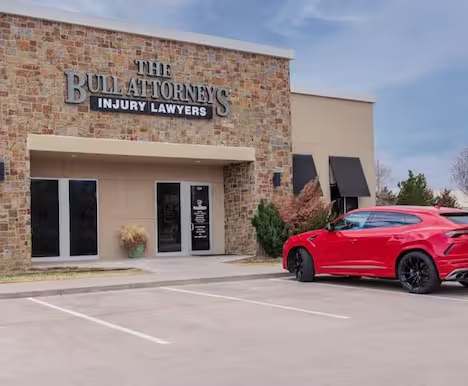
10111 E. 21st St. N #204
Wichita, KS 67206
Free consultation • No upfront costs
Not all lawyers are licensed in all states.